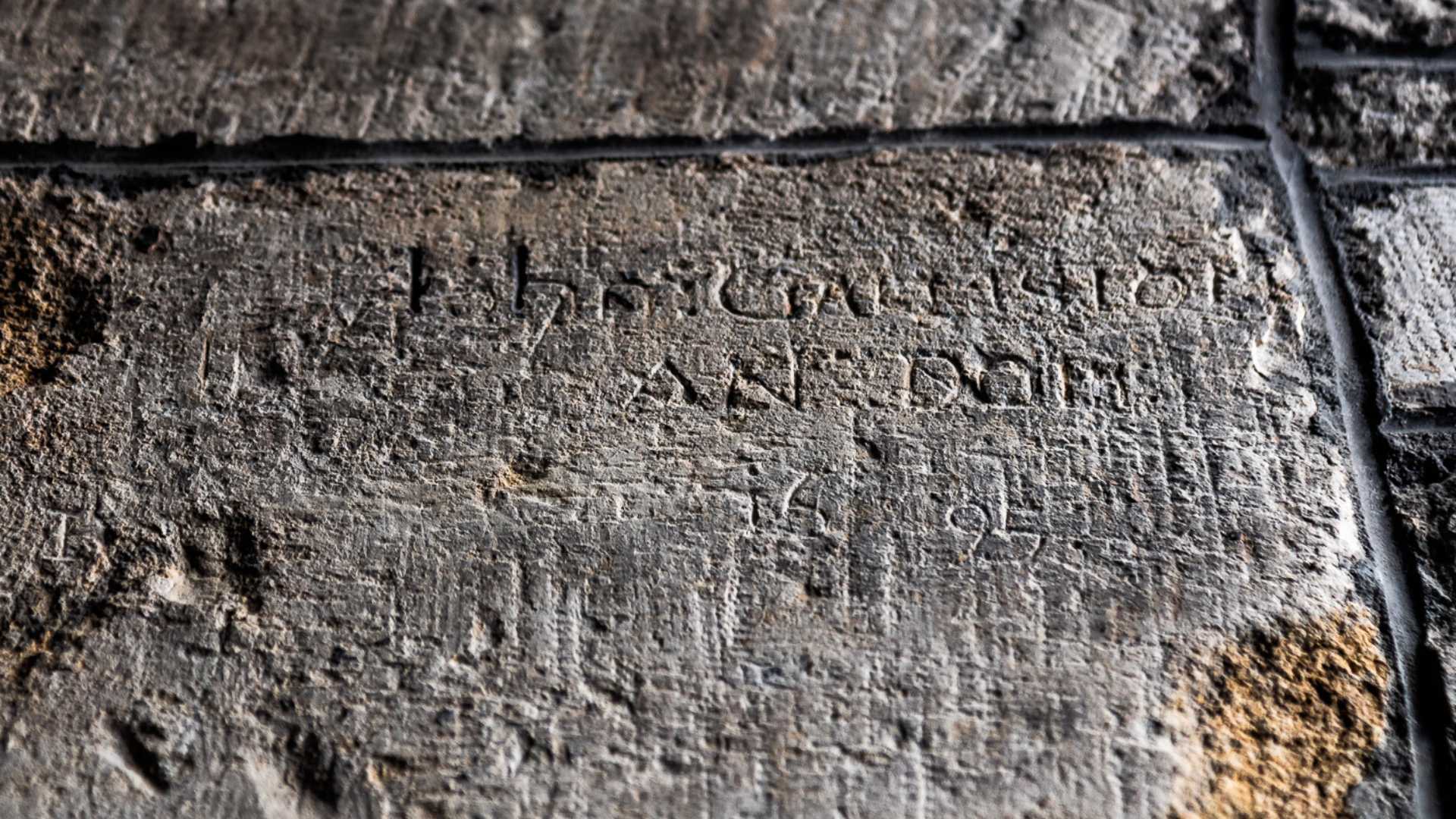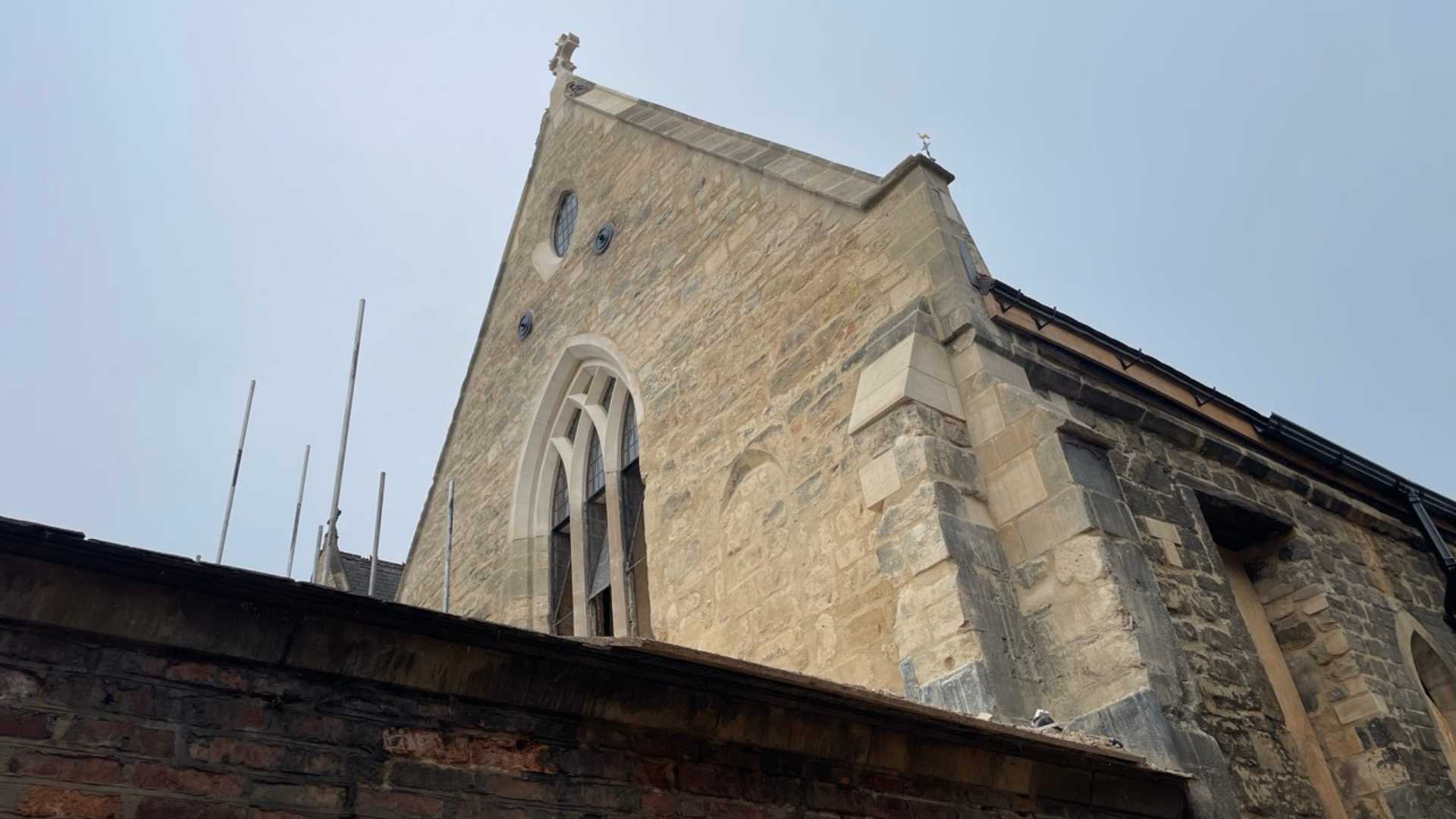
There are plenty of historic buildings in Lincoln, but there is one right in the city centre that goes unnoticed by 99% of passersby – Greyfriars. Tucked in next to Lincoln Central Library and St. Swithin’s church, Greyfriars dates back to 1237 when it was built as a home for the Franciscan friars. The Franciscan friars are part of an organisation in the Catholic Church founded by Saint Francis. They are similar to monks in that they dedicate their lives to religion, but unlike monks, who are self-sufficient and live in seclusion from the world, friars depend on charity, go out into the world to teach, preach, help the poor and run hospitals, and are supported by donations.
The land that Greyfriars is built on was donated to the Franciscan order, and the building was named after them – ‘grey friars’ due to their grey clothing – and originally was spread over 4 acres and included other monastic buildings too. Part of the friary still stands, and is thought to be one of the oldest surviving friary buildings in England.
Early Construction
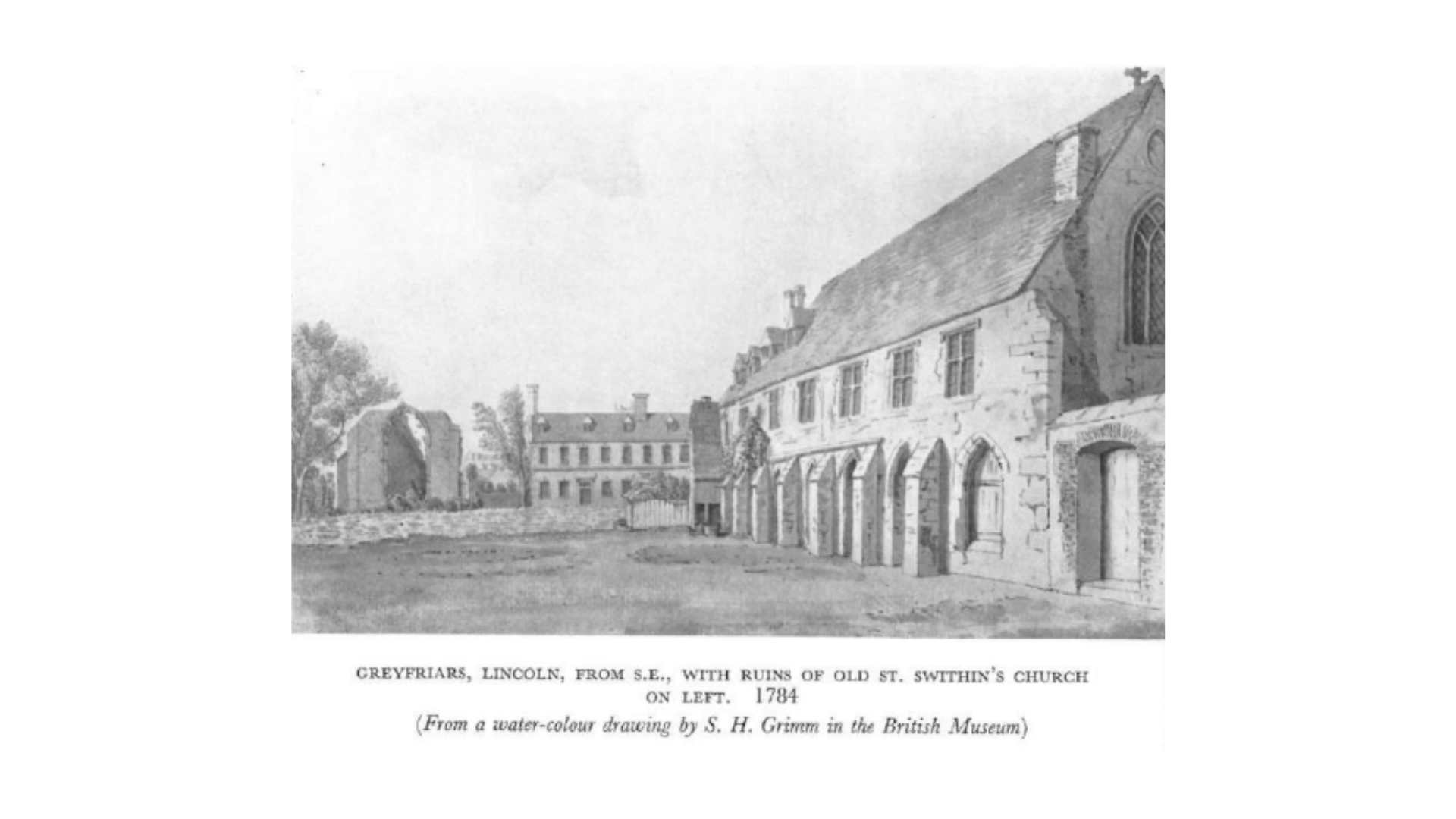
Image from The City & County Museum, Lincoln – an Illustrated Guide to the Building, from Lincoln Museum
The friars began building in the 1200s, when Henry III permitted them to accept the land. It was a long and narrow building that forms part of the north wall of the current site. It included cloisters, long, open walkways common in religious buildings like other friaries, monasteries and churches. The purpose of cloisters is to provide a space for the friars to walk, study, meditate or read. The original timber used in the construction of the roof beams was sourced locally, and many of the trusses are still present today.
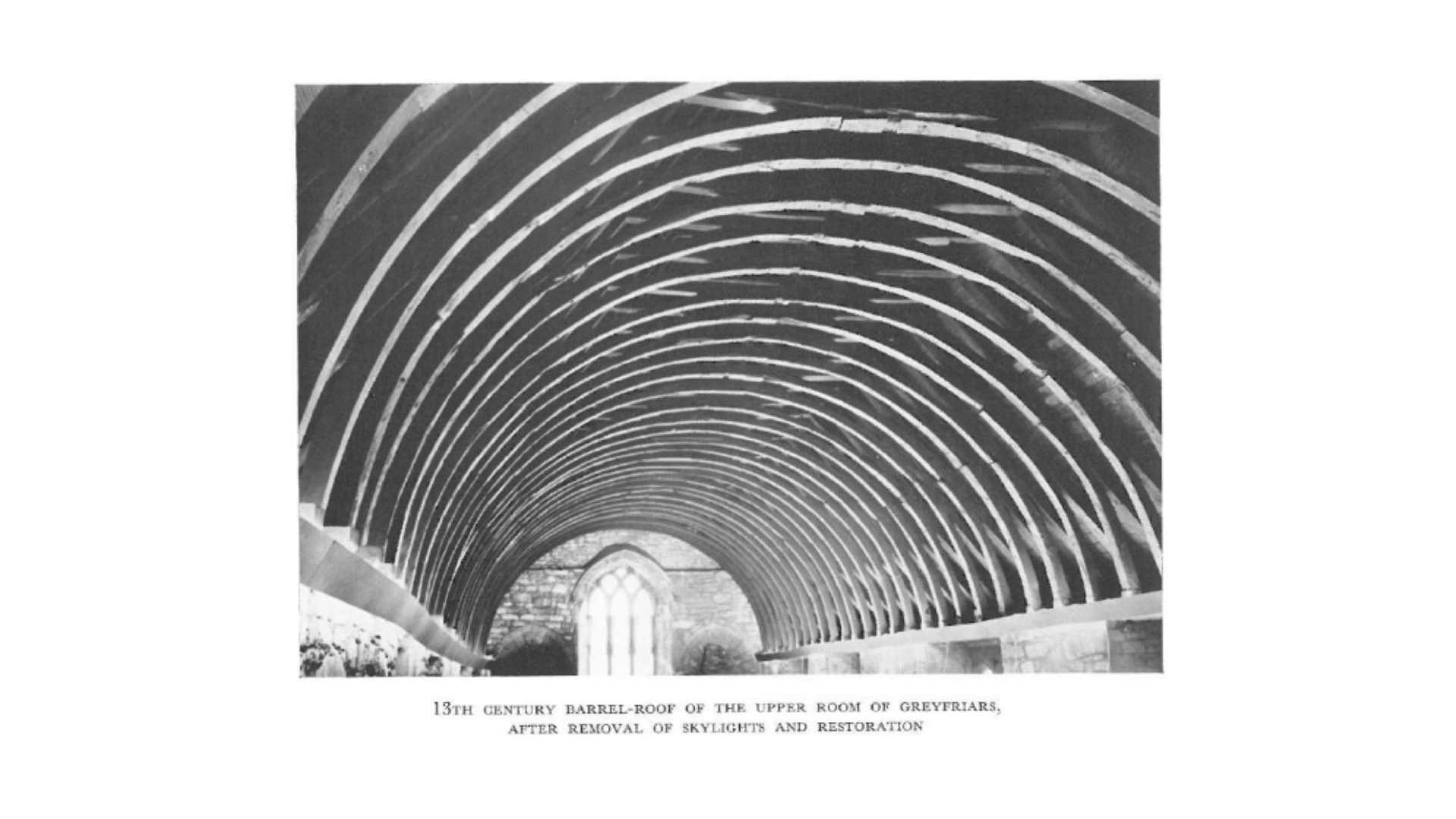
Image from The City & County Museum, Lincoln – an Illustrated Guide to the Building, page 4, from Lincoln Museum
The second phase of building took place in the late 13th century, and the friars dug down to include the undercroft, another part of the building which is still present today. This layout is not unusual for other buildings of the same time period. Other buildings were also added, including dwellings for the friars, who probably used the ground floor of the current building as a refectory.
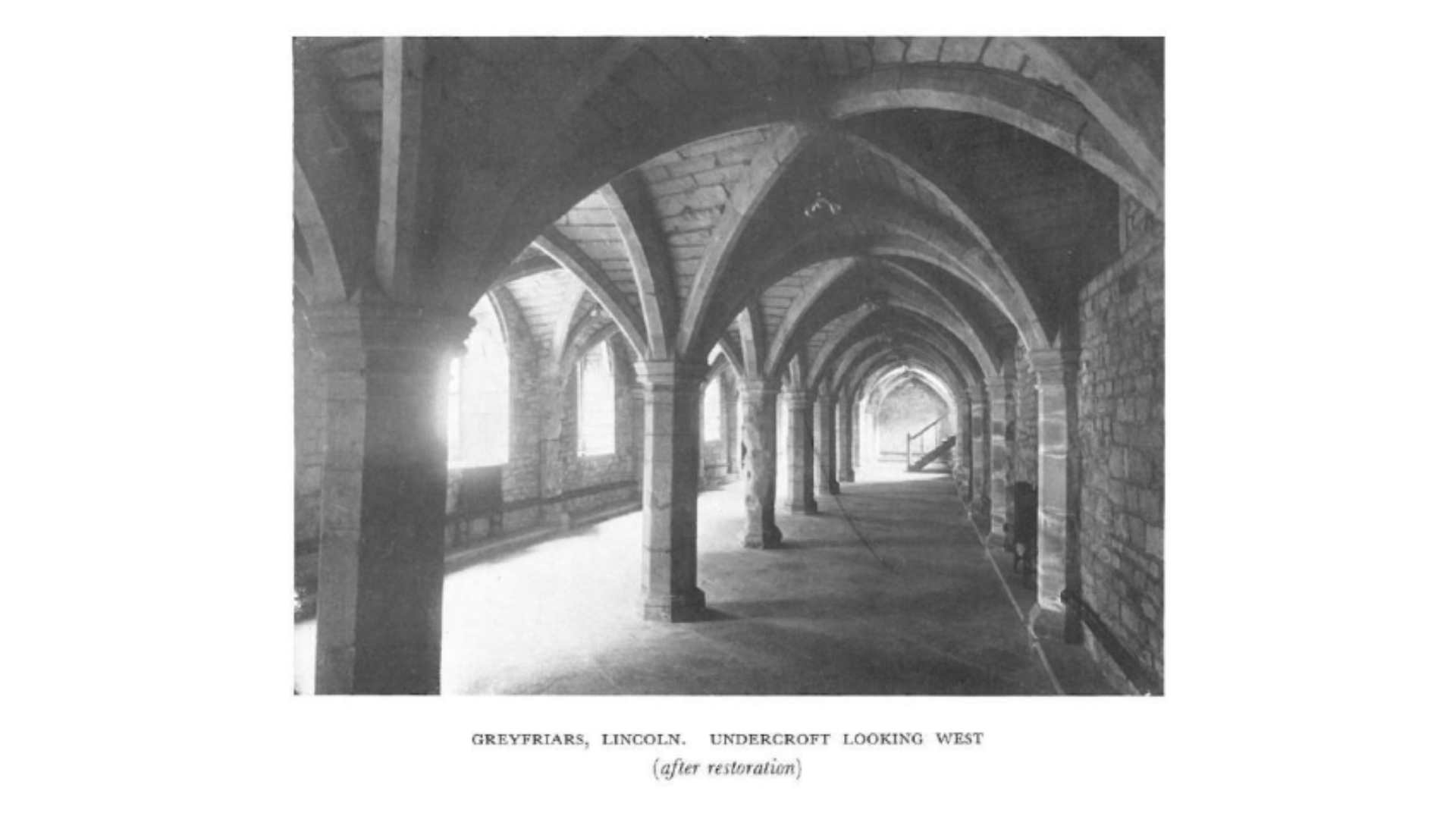
Image from The City & County Museum, Lincoln – an Illustrated Guide to the Building, page 5, from Lincoln Museum
More building took place in 1534 when the Warden of the Grey Friars obtained stone and timber for repairs, and the construction of a conduit to bring water from a nearby spring.
The Dissolution of the Monasteries
The friars lived and worked out of Greyfriars until 1538, when Henry VIII disbanded all Catholic monasteries, friaries, priories and convents in England, an event known as the Dissolution of the Monasteries. After this, the building was sold to William Monson of Ingleby, who most likely used the building as his private residence. Monson eventually bought it outright and passed it on to his son, Robert Monson, who converted the chapel into a free school, inspiring the name of the adjacent street, Free School Lane. Robert then bequeathed the friary to the city of Lincoln in 1583, and it has been city property ever since.
Previous Uses of Greyfriars
Post-dissolution, the Greyfriars building was used as a school from Robert Monson’s time up until 1900. During this time, the building was upgraded to include new windows, fireplaces and other amendments. In 1612, the undercroft was used as a ‘house of correction’, which was a type of jail or public institution designed to punish minor offenders and vagrants. In 1624, the undercroft was used as a wool store, likely at the same time that the former cloister area was being used as a sheep market. Following this, the undercroft housed the Jersey school of knitting and spinning until 1830, after which it was used as a meeting place for the Mechanics’ Institute founded by John Boole, father of the famous mathematician George Boole. In 1862, the undercroft was taken over by the grammar school that used the upper floor until the school closed in 1900. The building underwent some restoration under the supervision of local architect William Watkins and opened in 1907 as Lincoln’s City and County Museum. In 1974, Lincolnshire County Council took ownership of the building and continued its use as a museum until 2004, when the city’s artefacts were moved to the newly built Collection, now Lincoln Museum. The remains of more friary buildings were uncovered during the 1990s when the Central Library was being built next door, including a kitchen, refectory and dormitory used by the friars.
Greyfriars in the 21st Century
After the museum’s artefacts were moved to the Collection, the Greyfriars building went mostly unused except for temporary art exhibitions. In 2022, the City of Lincoln Council, in partnership with Heritage Lincolnshire, made plans to renovate Greyfriars and convert it into a heritage centre, venue and cafe with funding from The National Lottery Heritage Fund. The building requires extensive renovation and restoration work to make it safe for visitors, and work is underway at the time of writing (September 2025).
Greyfriars is set to open in 2026 and will be used as a venue for weddings, concerts, exhibitions, conferences, workshops, school visits, and more. Heritage Lincolnshire will also deliver a programme of activities and events to celebrate the rich history of Greyfriars, so that people can once again enjoy this incredible building right in the centre of Lincoln.
Sources:
https://www.lincolnmuseum.com/assets/downloads/CCM_greyfriars_booklet.pdf
https://www.visitlincoln.com/listing/greyfriars/96661101/