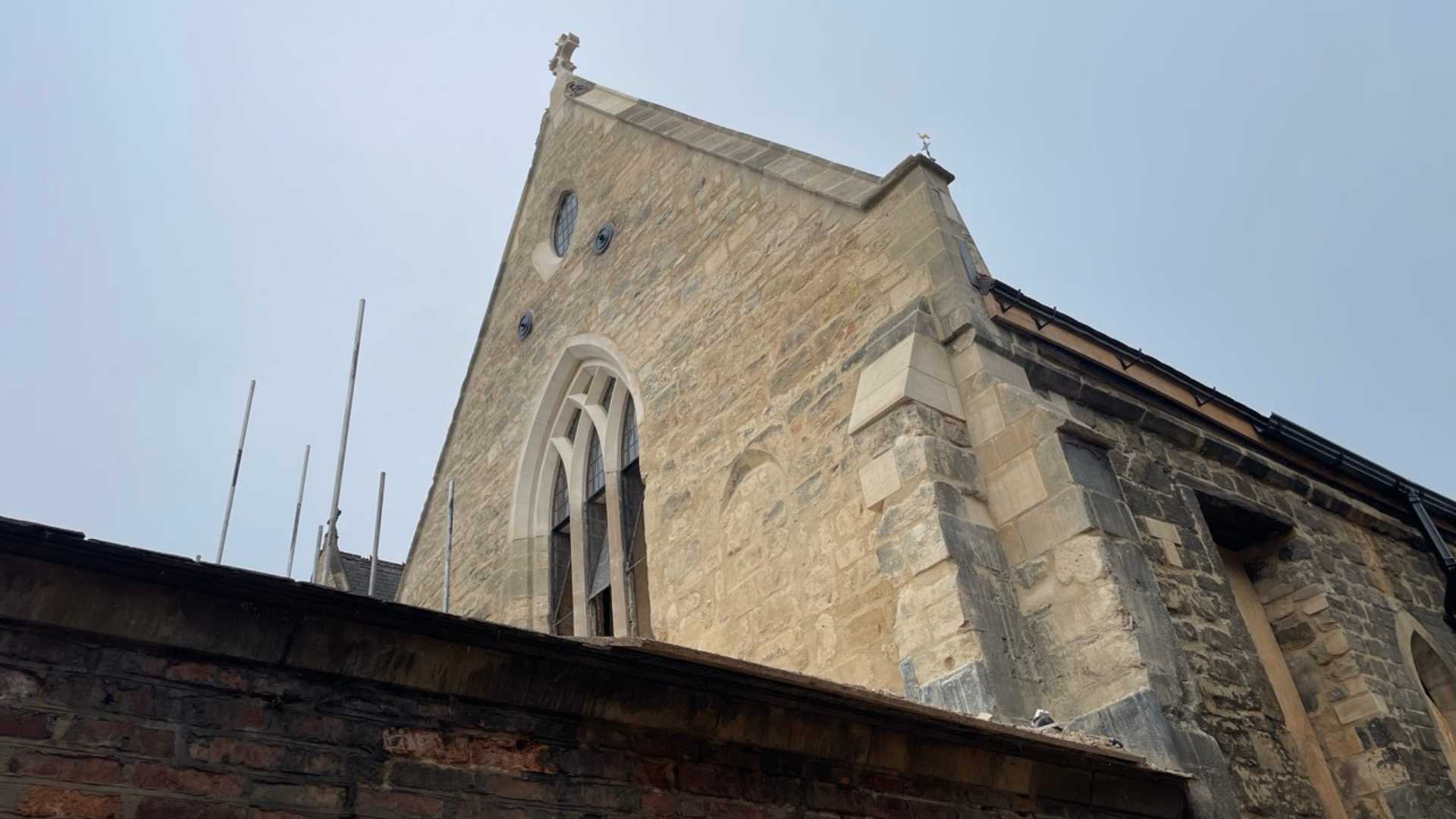
Lincoln is full of well-known historic landmarks, from the famous cathedral and medieval castle to Roman ruins dating back to the city’s origins as Lindum Colonia. But just off Lincoln’s High Street, another essential piece of Lincoln’s history is hidden in plain sight – Greyfriars. This historic friary in Lincoln is 800 years old and is one of the best-preserved Franciscan friary buildings in the country.
As the main building that comprises the modern Greyfriars site has been so well preserved and used consistently throughout history, it shows the progress of history and the many uses of the building, including unique architectural features, medieval graffiti, and other fascinating hidden gems.
A Hidden Piece of Lincoln’s Past
As a thriving medieval city, Lincoln was home to several friaries, including Greyfriars, Blackfriars, Whitefriars, Austin Friars and the Friars of the Sack. The presence of multiple friaries indicated that Lincoln was a city of wealth and importance during the medieval era. However, only one friary remains from this period – Greyfriars. Located on the edge of Lincoln’s Cultural Quarter, Greyfriars is a Grade 1 listed building and a Scheduled Ancient Monument of international importance. Greyfriars probably survived while other friaries in the city were lost because it was repurposed into a school very soon after the Dissolution of the monasteries, and has been in near-constant use ever since.
As the main building that comprises the modern Greyfriars site has been so well preserved and used consistently throughout history, it shows the progress of history and the many uses of the building, including unique architectural features, medieval graffiti, and other fascinating hidden gems.
The Architecture of Greyfriars
Greyfriars was built in two main phases during the early and latter 13th century, and subsequent buildings and further developments were added throughout the building’s use as a school and for other purposes. This means there are original features remaining that have been modified or built around that we can see today.

The roof of the first floor of Greyfriars was originally built in the late 13th century, and while much of the wood was replaced during a restoration in the early 20th century, much of the original timber is still in place. The style of vaulted ceiling, known as a barrel-roof, is partly made of curved trusses, and half is straight trusses. This could be due to the division of the first-floor room during the 1500s when it was used as a school, with one part being used as a classroom and the other being a library.
The former site of a pair of archways can also be seen on both the ground and first floor, built as part of phase one of the construction of Greyfriars. These most likely led to an attached building, which may have been demolished during phase two of the building process. The archways were blocked as new entrances were created to provide access to both floors.
The Undercroft

During phase two of construction, an undercroft was added to the Greyfriars building. The floor was lowered by around two feet, and the building was divided into upper and lower floors. An undercroft was a common style of building at the time, and the extra space was used for storage or sometimes, as a mortuary or crypt.
The undercroft was divided into nine areas by eight columns, each of which are connected by a vaulted ceiling, finished with chamfered ribs that connect to a carved leaf motif in the centre. While the upper floor of Greyfriars was used as a school building from the mid-16th century until 1900, the undercroft was used for various purposes, including a house of correction, a wool factory and a mechanics institute.
Historic Graffiti
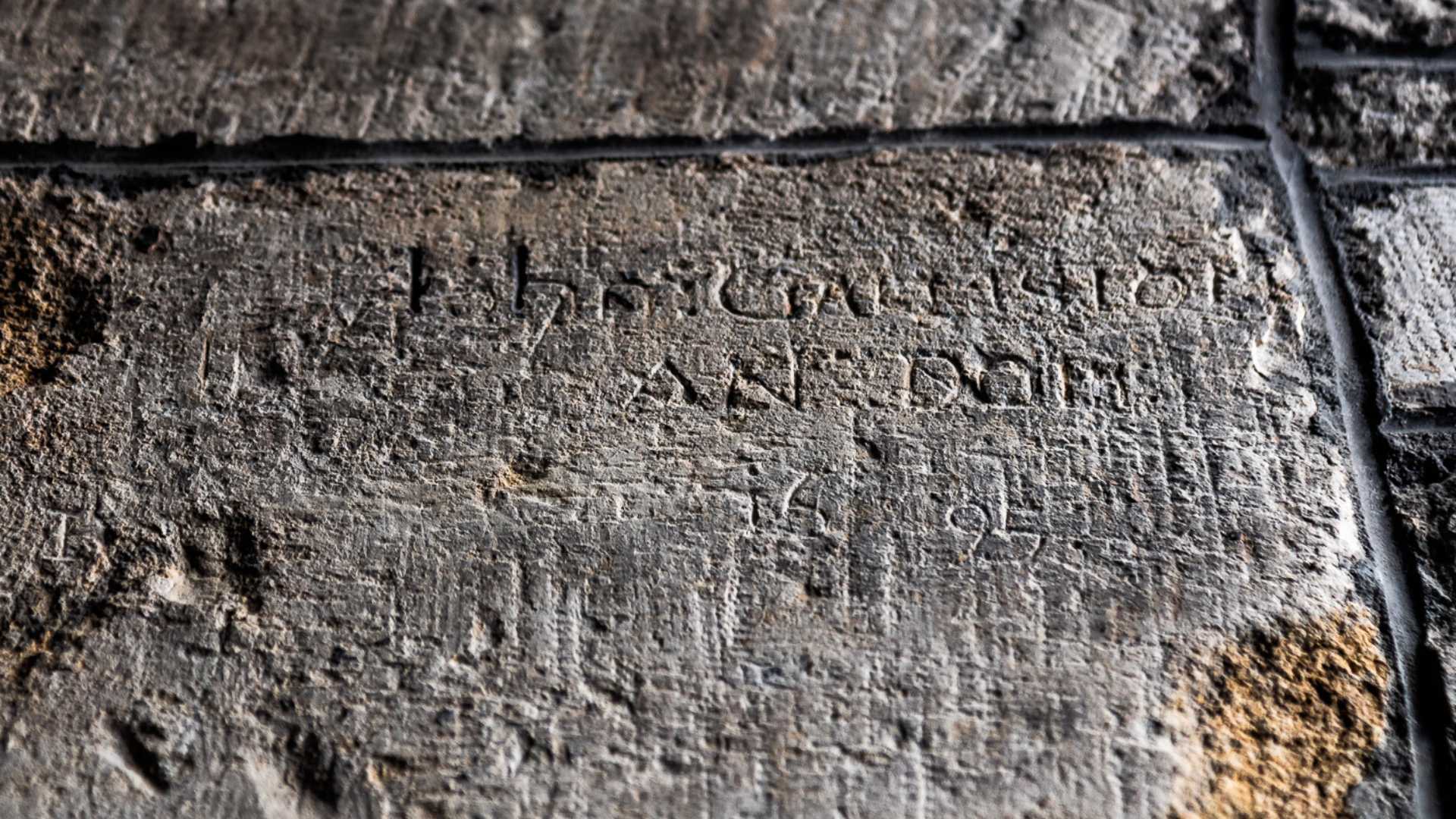
Many people have carved or etched their name or a message into the walls of Greyfriars, preserving their memory for centuries to come. Some great examples of graffiti can be found in Greyfriars that date back to the 18th century and even further.
Some of the earliest examples of graffiti in Greyfriars are known as mason marks, which were probably carved into the stone walls by the stonemasons who worked on its construction. Stonemasons used these mason marks to identify the source of the stone used or the banker or merchant who paid for it, the mason who used the stone for building purposes, or to denote something about the construction process or the actual stone itself.
There are more sophisticated examples of graffiti in Greyfriars, including names, dates and even game boards! The image below shows a ‘Merels’ board on the left, which can be used to play a game known as Nine Men’s Morris, and a ‘Fox and Geese’ board on the right, used for a game of the same name.

Other great examples of graffiti can be found in Greyfriars, from ornate examples like the one below, presumably carved by C. Davidson in 1888.

Here are some other amazing examples of graffiti that can be seen in Greyfriars:


Exploring the Historic Friary in Lincoln Today
Greyfriars is currently being restored by Heritage Lincolnshire and the City of Lincoln Council, thanks to a grant from The National Lottery Heritage Fund, and will be opening in 2026 to welcome visitors once again. This renovation project aims to conserve the original structure of Greyfriars while transforming the space into a cultural centre and events venue. Greyfriars will include a café and event spaces that can be used for concerts, workshops, weddings and school visits, as well as hosting guided tours and interactive heritage displays. The renovation has been planned with accessibility in mind, so both floors are accessible and a Changing Places toilet is available for use.
Planning Your Visit to Greyfriars
Greyfriars is located right in the centre of the city of Lincoln, within easy walking distance of the bus and train station. Several car parks are close by, including Lincoln Central car park and Broadgate. A visit to Greyfriars fits in perfectly with a Lincoln day trip, with plenty of time to visit other local landmarks such as the Cathedral, Lincoln Castle, Brayford Pool and Lincoln Museum. A cafe is located on site, but there are also hundreds of restaurants and bars nearby in the city centre to choose from.
The historic friary in Lincoln stands as a rare reminder of how faith, education, and community have intertwined over the centuries. Its survival through wars, reformations, and reinvention is a story of resilience, and well worth exploring in person.
You can read more about Greyfriars and its 800-year history here, or find out more about Lincolnshire’s heritage projects at Heritage Lincolnshire.